

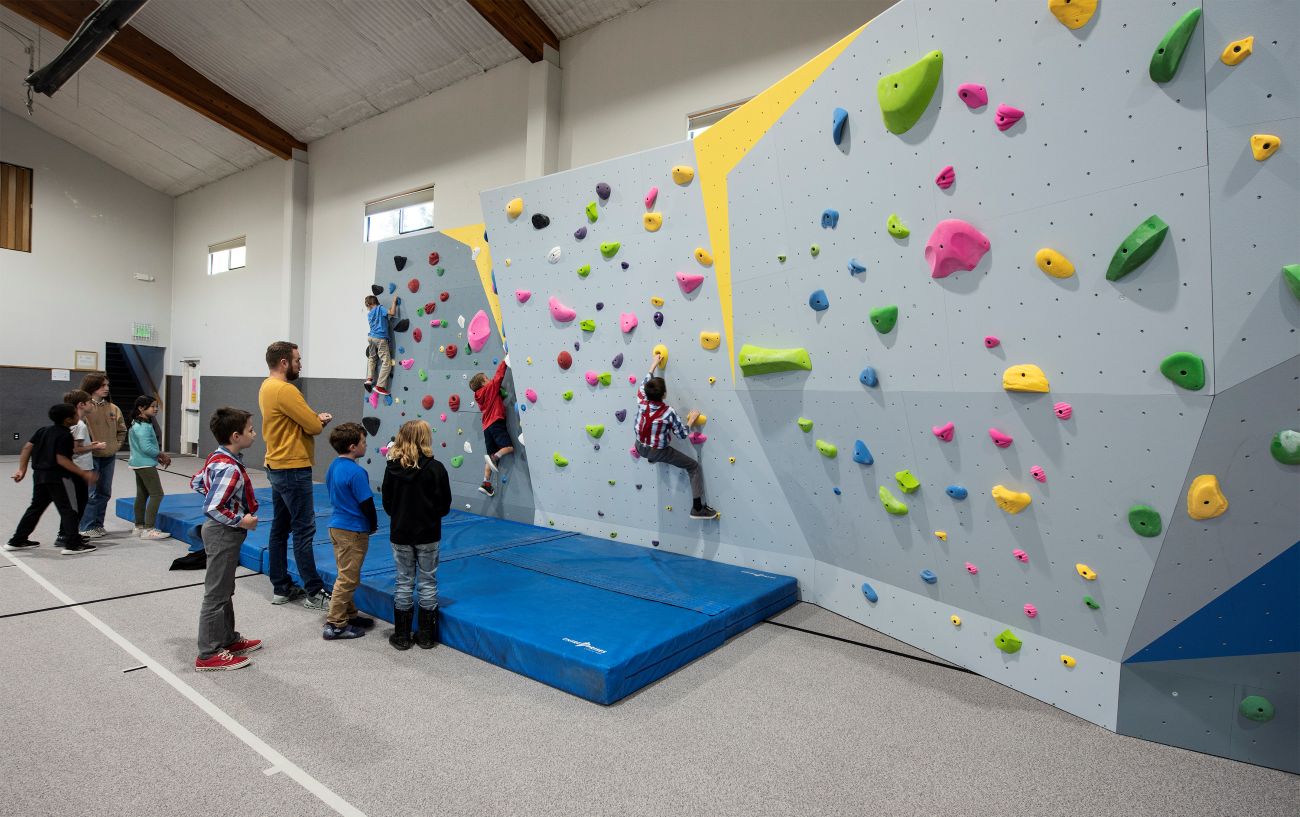
Schools today face the challenge of supporting students not only in physical fitness, but also in communication, emotional health, and peer connection. As physical education programs evolve, many private K–12 schools are seeking activities that blend movement with meaningful skill-building.
Climbing has become one of those solutions. Whether through indoor walls, outdoor climbing structures, or dedicated climbing spaces, schools are discovering that climbing offers far more than physical exercise. It creates opportunities for students to collaborate, solve problems, and build confidence in ways that feel natural and highly engaging.
Building Communication and Trust
Climbing encourages students to talk to one another, share ideas, and work together toward a common goal. Even in simple bouldering activities—where students climb shorter walls without ropes—communication quickly becomes part of the experience. Students naturally discuss which holds to try, offer encouragement, and help classmates plan their next move.
These moments teach students how to communicate clearly, listen actively, and support peers. Because progress on the wall is visible and immediate, students quickly see the impact of positive communication.
In older grades that incorporate supervised roped climbing, communication becomes even more structured. Climbers and partners must use consistent verbal cues and demonstrate mutual trust. While not every school uses roped systems, those that do often notice improvements in teamwork and peer relationships across other areas of school life.
Confidence, Resilience, and Emotional Growth
Climbing provides built-in opportunities to practice persistence and manage emotions. Each route presents a challenge that may take multiple attempts to complete. When students try, adjust, and try again, they experience a clear example of what perseverance can look like in action.
Since climbs can be chosen at different levels of difficulty, students who may be hesitant in traditional sports often find climbing approachable. Every small success—reaching a new hold, improving a technique, or completing a route—reinforces confidence and encourages a growth-oriented mindset.
Climbing also requires focus and body awareness. Many students find that concentrating on the next move helps quiet distractions and promotes calm, controlled breathing. This can be especially valuable for students who benefit from sensory-friendly movement or activities that support emotional regulation.
Educators often notice that climbing gives students space to practice patience, work through challenges, and try again after setbacks.
Physical Literacy and Problem-Solving
Climbing supports foundational movement skills while engaging students cognitively. It strengthens grip, balance, coordination, and core stability, essential components of physical literacy.
At the same time, each climb is a puzzle. Students must plan their route, make decisions in real time, and adjust when a chosen approach doesn’t work. The blend of physical and cognitive challenge can be especially engaging for kinesthetic learners and students who benefit from hands-on exploration.
Since recreational climbing is self-paced and non-competitive, it allows students to participate without the pressure of scorekeeping. This inclusivity helps engage a wide range of abilities and interests within a shared environment.
Social-Emotional Learning in Practice
Climbing environments naturally support social-emotional learning (SEL). Students encourage one another, celebrate achievements, and share strategies when a classmate feels stuck. These moments build empathy, patience, and a sense of community.
Teachers often report natural leadership development, as well. More experienced climbers assist newer students, model safe behavior, or help demonstrate techniques. These interactions strengthen peer relationships and give students opportunities to take on meaningful roles.
Students can challenge themselves at different levels while still participating together, climbing helps create a supportive, inclusive atmosphere.
Bringing Climbing to Your Campus
Climbing can be integrated into many types of school environments, allowing administrators to choose what fits their space and programming needs. Schools typically consider one or more of the following options:
Traverse Walls
Low-height, lateral climbing walls that allow students to move horizontally
- No ropes or harnesses required, only shoes on your feet
- Fits well in gyms or multipurpose rooms
- Ideal for younger grades and early skill-building
Modular Wall Systems
Pre-designed climbing panels scaled for daily PE use
- Customizable layouts
- Adaptable to existing gym spaces
- Durable, flexible, and easy to maintain
Indoor Bouldering Walls
Shorter, rope-free walls designed for active group movement
- Typically 8–12 feet tall
- Suitable for structured lessons and open climbing
- Supports a wide range of ages
Outdoor Climbing Boulders
Durable structures for year-round outdoor activity
- Encourage unstructured play and social interaction
- Low-maintenance and weather-resistant
- Energize recess and outdoor learning spaces
Taller Roped Walls with Auto-Belays
Vertical climbing walls that support a wide range of ages and abilities
- Can be used with auto-belays or traditional belay systems
- Expand PE, club, and after-school programming
- Offer clear skill progression and varied challenge levels
- Well-suited for larger gyms or renovated activity spaces
Schools typically base their decision on age ranges, supervision needs, available space, and long-term programming goals. Even smaller installations can offer meaningful opportunities for confidence-building, collaboration, and physical literacy.
Lifelong Lessons Beyond the Wall
Climbing offers students more than physical activity. It provides opportunities to practice communication, resilience, problem-solving, and support others—skills that extend far beyond the gym.
For private schools committed to developing confident, capable, and connected learners, climbing can be a meaningful addition to physical education and wellness programming.
Whether introduced through a wall, boulder, or dedicated climbing space, the activity provides opportunities for students to grow physically, socially, and emotionally.
This article is courtesy of EP Climbing, a pioneer of indoor climbing that has been building climbing walls and boulders since 1983, www.epclimbing.com.